Renewable Energy Inspection
Autonomous Offshore Wind Turbine Inspection Fleets Operationalize Edge AI and LiDAR Navigation
Maritime energy operators are now deploying fully autonomous drone fleets equipped with solid-state LiDAR and onboard neural processors to inspect offshore wind turbine blades without human pilot oversight.
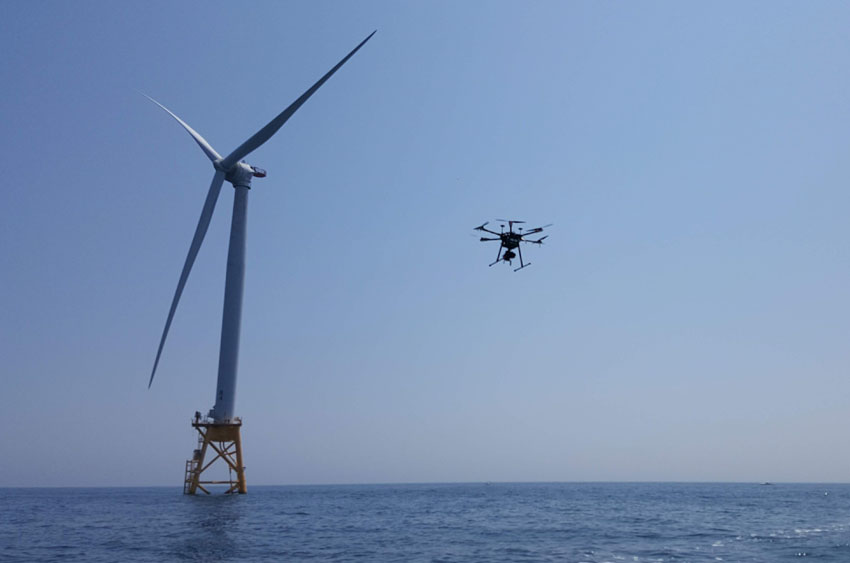
Harsh maritime weather, corrosive salt spray, and extreme aerodynamic stress place immense structural demands on offshore wind turbine blades, necessitating rigorous, frequent inspection routines. Traditionally, these inspections required specialized rope access technicians dangling from nacelles or manned helicopter sweeps that were frequently grounded due to high winds and low visibility. Marking a major technological leap for offshore asset management, Horizon Marine Inspection has launched fully autonomous drone fleets capable of conducting complete structural integrity audits on multi-megawatt offshore wind turbines in winds up to twenty-five meters per second, entirely independent of human pilots.
The technological foundation enabling this level of autonomous offshore operation is the integration of lightweight solid-state LiDAR sensors combined with edge-AI inference processors running directly onboard the airframe. As the drone approaches a towering offshore turbine blade, the solid-state LiDAR sweeps the composite surface at millions of points per second, generating a real-time three-dimensional point cloud. Concurrently, a high-resolution optical camera system captures macro-photographic frames of the blade surface while an onboard neural processing unit screens every frame in real time for micro-cracks, lightning strike pitting, leading-edge erosion, and laminate delamination.
Navigating in the immediate vicinity of a massive steel and fiberglass turbine structure presents severe electromagnetic and aerodynamic challenges. Rotating blades, even when feathered, generate complex vortex wakes and localized turbulence that can easily destabilize standard commercial multi-rotors. To overcome this, Horizon Marine's engineering team developed an advanced wake-prediction algorithm that models aerodynamic disturbances around the tower column in real time. Combined with multi-band GPS-denied visual inertial odometry, the drone maintains sub-centimeter relative positioning accuracy even when operating directly inside the turbulent wake shadow of the turbine rotor sweep zone.
Data transmission from remote offshore wind farms—often located tens of kilometers out to sea—has historically created severe bottlenecks for remote sensing operations. To resolve this, the inspection drones utilize a private 5G standalone maritime mesh network deployed across the wind farm substation platforms. High-definition structural defect images and compressed 3D point clouds are transmitted instantly to edge servers located on the offshore substation, where automated computer vision pipelines generate preliminary damage assessment reports before the drone even completes its return-to-home landing sequence.
Energy utility executives reviewing early deployment metrics report dramatic improvements in maintenance efficiency and risk reduction. By shifting from reactive damage repair to proactive predictive maintenance driven by consistent drone inspections, operators have lowered unplanned turbine downtime by over forty percent. Furthermore, eliminating the need to deploy human technicians into hazardous offshore working environments during marginal weather conditions has significantly improved overall workplace safety compliance across major European energy portfolios.
Looking toward future iterations, Horizon Marine is collaborating with offshore wind developers to integrate inductive wireless charging pads directly onto turbine maintenance platforms. This addition will enable persistent, round-the-clock autonomous residency, allowing drone fleets to conduct rapid response inspections immediately following severe offshore storm events without requiring human technicians to travel offshore for deployment.
The broader implications for the renewable energy inspection sector extend well beyond the immediate technical achievement. Industry analysts note that this deployment represents a convergence of several previously separate technological streams — advanced materials science, edge computing, and autonomous flight control — into a single integrated platform. The fact that these systems can now operate reliably in real-world conditions, rather than only in controlled test environments, signals a maturation of the unmanned aviation industry that has been anticipated for over a decade.
Safety certification and regulatory compliance remain among the most significant hurdles for widespread adoption. Aviation authorities worldwide have been working to establish clear operational frameworks that balance innovation with public safety. The platform described here has undergone extensive testing under various regulatory regimes, including controlled airspace trials, risk assessment evaluations, and operational safety case reviews. These regulatory milestones are as important as the technical specifications, because they determine whether a technology can transition from experimental novelty to routine commercial deployment.
The economic case for this technology becomes more compelling when examined over extended operational timelines. While initial acquisition costs may exceed those of traditional methods, the cumulative savings from reduced labor requirements, decreased downtime, and prevention of catastrophic failures create a compelling return on investment. Organizations that have integrated these systems into their standard operational workflows report that the total cost of ownership over a three-year period is significantly lower than maintaining equivalent conventional capabilities, particularly when factoring in the avoided costs of accidents, delays, and environmental damage.
Looking ahead, the development roadmap for this platform includes several enhancements that could further expand its operational utility. Engineers are exploring integration with complementary sensor technologies, improved machine learning models for real-time decision making, and enhanced communication protocols that would allow seamless coordination with other autonomous systems. The vision is not simply a better individual aircraft, but a connected ecosystem of unmanned platforms that can share data, coordinate missions, and collectively adapt to changing environmental conditions without human intervention.
Environmental considerations play an increasingly central role in the design and deployment of unmanned aerial systems. The shift away from fossil-fuel-dependent manned aircraft toward electric and hydrogen-powered drones represents a meaningful reduction in carbon emissions per mission. Additionally, the reduced acoustic footprint of these platforms minimizes disturbance to wildlife populations in sensitive ecological zones, an important factor for operations near protected habitats and marine reserves. The sustainability benefits extend to reduced ground vehicle deployments, as drone-based inspections eliminate the need for trucks and heavy equipment to access remote inspection sites.
Related briefings
More from
Renewable Energy Inspection

Industrial Logistics
AeroHytech Deploys Hydrogen-Powered Heavy-Lift Cargo UAVs for Remote Alpine Infrastructure Supply
Breaking endurance barriers in extreme environments, AeroHytech has officially commercialized a hydrogen-fuel-cell heavy-lift drone capable of sustained multi-hour freight missions across high-altitude terrain.
Precision Agriculture
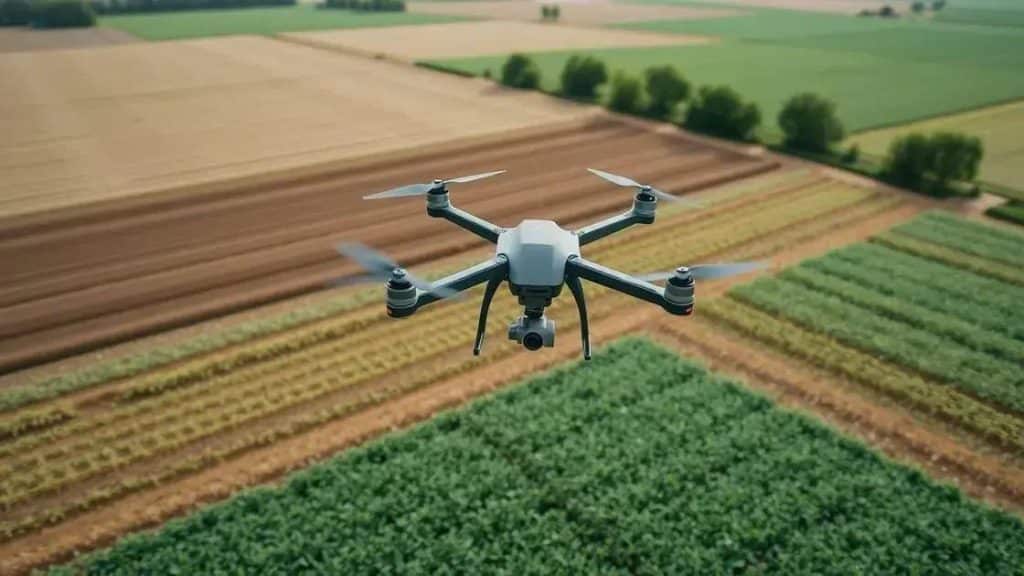
Precision Agritech Breakthrough: Hyperspectral Drone Swarms Enable Real-Time Crop Disease Mapping
Agricultural researchers have successfully deployed synchronized drone swarms utilizing hyperspectral imaging and machine learning to detect crop pathogens days before visible symptoms emerge in the field.
Urban Mobility
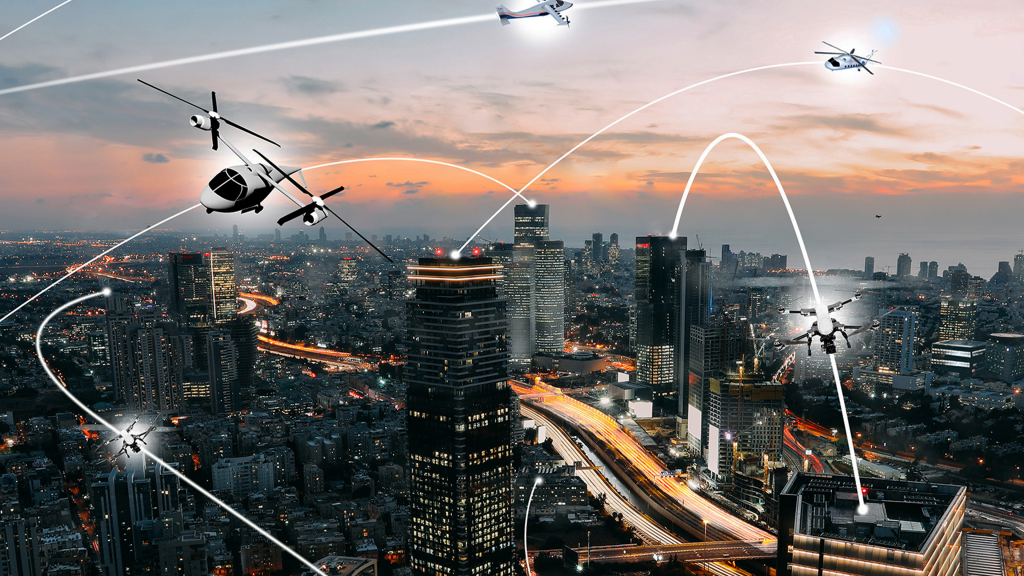
Urban Air Mobility Cargo Logistics Network Integrates AI-Driven Airspace Deconfliction Protocols
Municipal transport authorities and urban logistics providers have initiated live testing of heavy-payload cargo UAV corridors governed by decentralized artificial intelligence air traffic management systems.