Regulatory & Policy
Part 108 Rewrites the Economics of Flying Beyond Visual Line of Sight
The FAA's performance-based BVLOS framework is moving approvals away from one-off waivers and toward aircraft-level standards, changing what delivery, inspection and emergency operators can plan for.
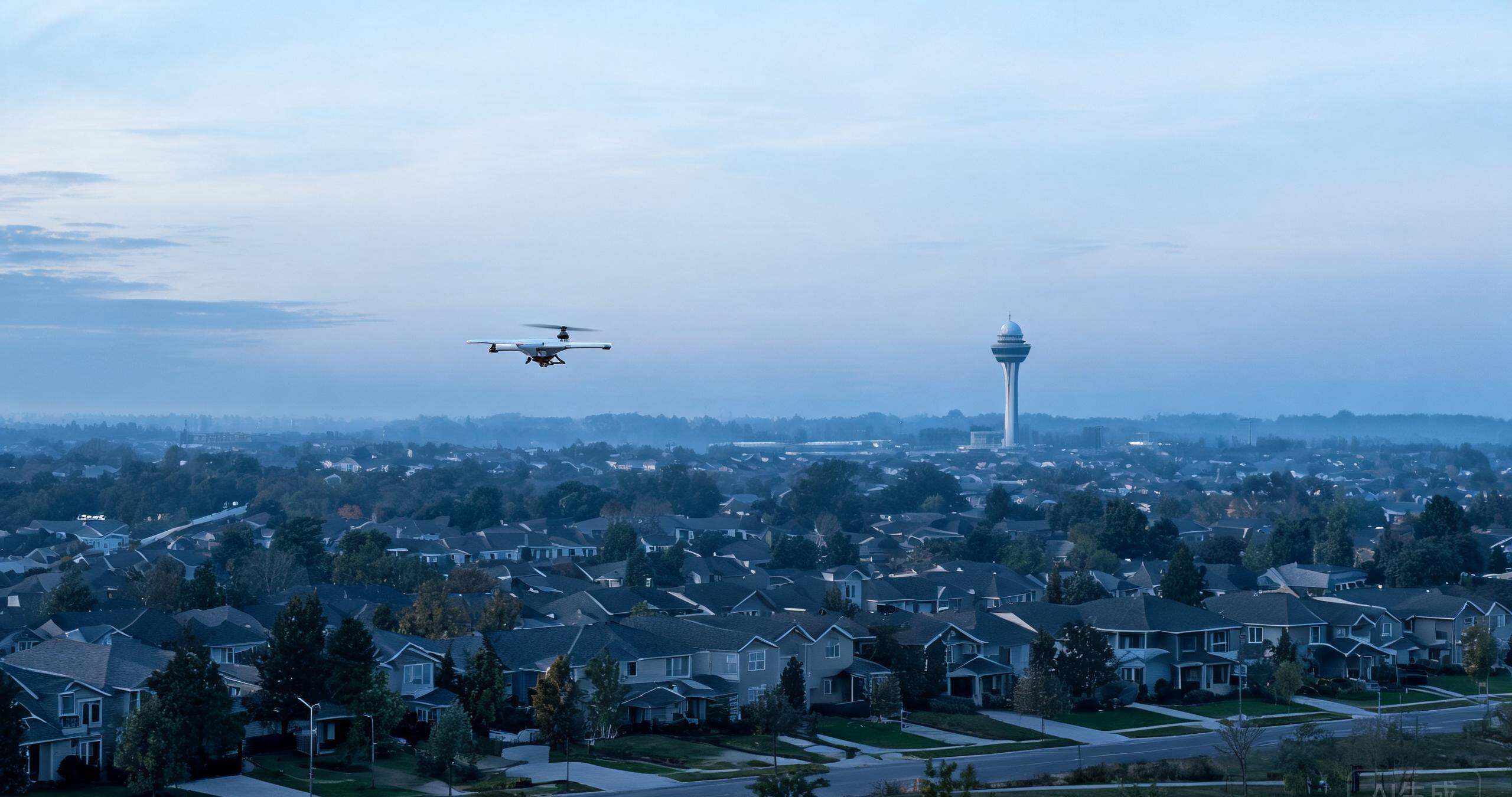
For most of the past decade, flying a drone beyond the pilot's line of sight in the United States has been an exercise in paperwork. Operators seeking relief from the visual-line-of-sight restriction in Part 107 have had to file a waiver under section 107.200, submit a safety case that often runs to dozens of pages, and wait months for a decision that applies only to the specific aircraft, route and crew described in the filing. The waiver system was designed as an exception, and it has behaved like one: slow, inconsistent between Flight Standards District Offices, and effectively impossible to scale across a national network of delivery corridors or inspection routes.
That exception is now being converted into a rule. The FAA's proposed Part 108, released in August 2025 under the title Normalizing Unmanned Aircraft Systems Beyond Visual Line of Sight Operations, would create a standing operating framework for small uncrewed aircraft flying without visual observers. Instead of asking whether a particular flight is safe enough to permit, the proposal asks whether the aircraft and the operation meet published performance requirements. That is a profound shift in regulatory posture, and it is the single most consequential change for the commercial drone economy since Part 107 itself took effect in 2016.
The architecture of the proposal rests on three pillars. The first is aircraft capability. To operate beyond visual range, an unmanned aircraft would need a detect-and-avoid system that meets a published performance standard, along with redundant command-and-control links, position reporting and, in most cases, participation in the ADS-B ecosystem or an equivalent cooperative surveillance channel. The second is operational geography. The proposal carves out categories of airspace and ground environment, from sparsely populated corridors to shielded operations behind structures, and applies different levels of rigor to each. The third is the operator itself, which would need to demonstrate a safety management approach, training and maintenance discipline rather than simply possessing a remote pilot certificate.
Detect-and-avoid is where the engineering difficulty lives. A human pilot on the ground uses depth perception, motion cues and context to judge whether an aircraft on the horizon is closing. A machine has to reproduce that judgment with sensors and software, and it has to do so at ranges that leave room for a maneuver. Ground-based radar can see far but struggles in urban clutter. Onboard electro-optical systems, of the kind built by Iris Automation and several competitors, can classify aircraft at roughly one nautical mile in good visibility but degrade in haze, low sun or rain. Cooperative electronic surveillance through ADS-B In is precise where other aircraft transmit, which is nearly universal for crewed IFR traffic but far from universal for light sport aircraft and gliders. The ASTM F3442 standard, which defines detect-and-avoid performance requirements, has become the common technical language for these claims, and the FAA's proposal leans on it heavily.
For operators, the practical consequence is that approval shifts from the flight to the fleet. Under a waiver regime, every new route needs a new filing. Under a performance framework, an aircraft that conforms to the required standard and an operator that meets the operating rules should be able to add routes within the defined envelope without returning to the regulator each time. That changes the unit economics of businesses whose entire value proposition depends on density: pharmacy delivery, laboratory sample movement, pipeline and powerline inspection, and agricultural scouting. It also changes the capital calculation, because the cost of certification is paid once per aircraft type rather than once per mission.
The comparison with Europe is instructive. EASA's U-space regulations, applicable since January 2023, built a service layer around airspace rather than around individual operators. U-space service providers are certified to supply traffic information, geo-awareness and conformance monitoring, and drones operating in designated volumes interact with that layer through standardized digital messages. The result is a system designed for many operators sharing the same airspace. The American proposal is more operator-centric, but the two models are converging on the same idea: routine beyond-visual-range flight requires a digital infrastructure for deconfliction, not just a piece of paper.
That infrastructure is still incomplete. The FAA's Low Altitude Authorization and Notification Capability handles airspace authorizations near airports, but it was built for visual-range operations and does not carry the traffic awareness that high-density BVLOS operations will require. UAS traffic management, or UTM, has been the subject of pilot programs and standards work for years, and the commercial service suppliers that will operate it are only now moving from demonstrations to production systems. Remote identification, mandatory since September 2023, provides a foundation for identifying cooperative aircraft, but it is a broadcast technology and offers no protection against the deliberately anonymous.
The remaining friction is political rather than technical. State and local governments have passed a patchwork of statutes on drone operations, privacy and local preemption, and the 2024 FAA reauthorization contained provisions intended to clarify federal authority over airspace while preserving limited local roles. Property rights questions, particularly over low-altitude overflight, continue to generate litigation. Operators planning national networks still have to model a country in which the rules near a substation in one state may differ from those near an identical substation across a border.
What should operators do while the final rule works its way through the last procedural stages? The first answer is to build reusable evidence. Safety cases assembled for waivers contain most of the material a performance-based approval will require, but only if they are structured around hazard analysis and mitigation performance instead of narrative. The second is to invest in conforming detect-and-avoid hardware early, because the aircraft procured in 2026 will still be flying when the rule takes effect. The third is to treat airspace coordination as an operational capability rather than a compliance chore, since the operators who can share a corridor safely will be the ones granted the density.
Part 108 will not make the sky self-organizing. It will, however, move beyond-visual-range flight from a negotiated privilege to an engineered permission, and that is the difference between a demonstration economy and an infrastructure economy.
Related briefings
More from
Regulatory & Policy

Wildfire Response
Satellites, Camera Networks and Long-Endurance Drones Compress Wildfire Detection to Minutes
A layered detection stack of hilltop cameras, thermal satellites and fixed-wing drones is shrinking the gap between ignition and dispatch, while airspace coordination and false-alarm filtering remain the hard problems.
Counter-UAS
Airport Counter-Drone Programs Move From Jamming to Layered, Evidence-Graded Detection
After years of ad-hoc trials, airports are building permanent detection architectures that fuse radio frequency, radar, acoustic and optical data, while regulators slowly define who may actually take a drone down.

Emissions Monitoring
Drone-Based Methane Audits Become the Default Evidence for Emissions Compliance
Tightening federal methane rules and a rising waste-emissions charge are turning drone-borne laser spectroscopy from a pilot project into the routine evidentiary layer for oil and gas operators.