Warehouse Automation
Warehouse Inventory Drones Move Beyond Barcode Reading
Indoor drones are adding RFID, photogrammetry and damage detection to routine cycle counts, turning periodic accuracy checks into something closer to continuous inventory truth.
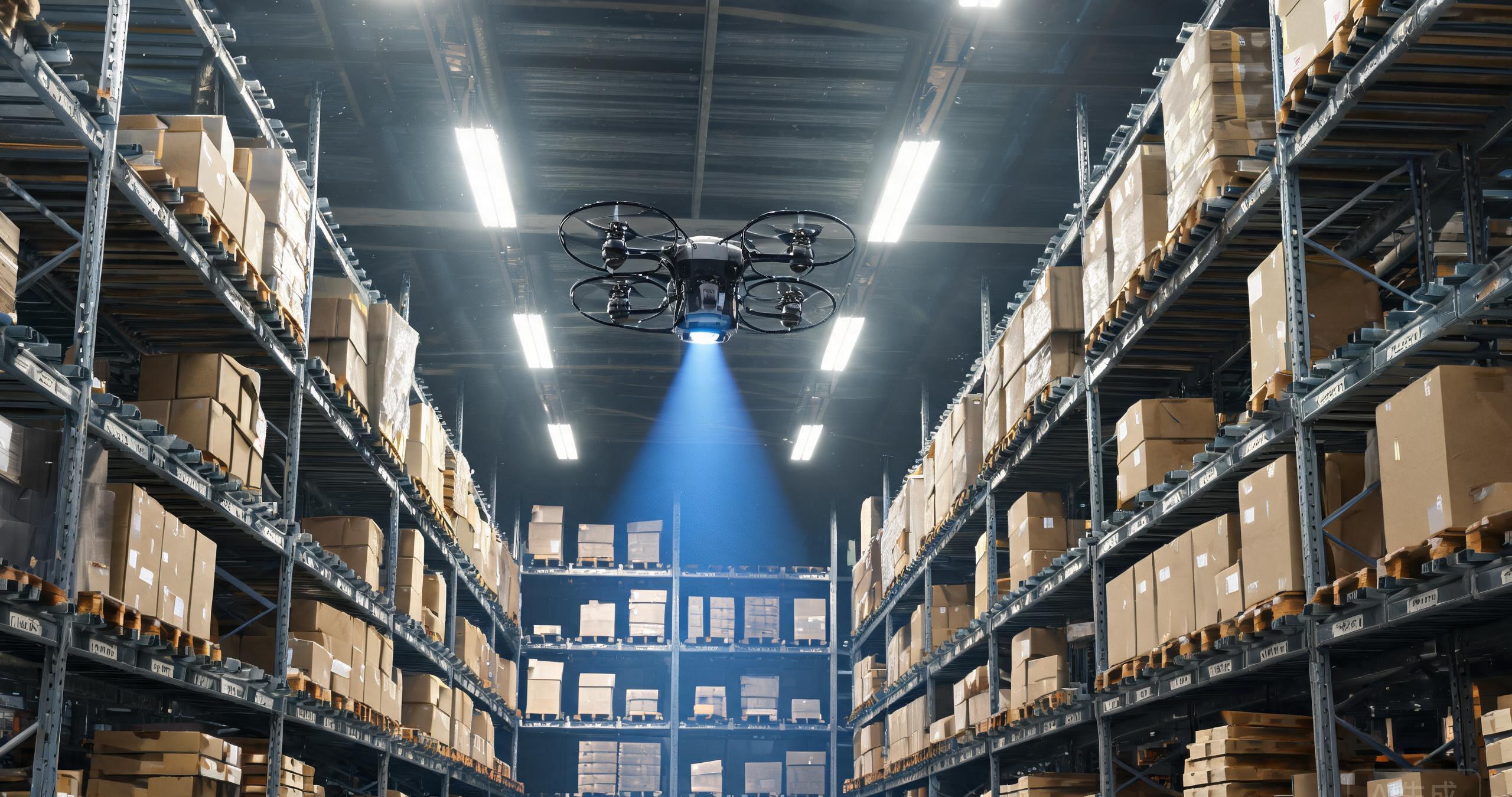
Warehouse inventory records are wrong more often than operators like to admit. Industry benchmarks have long placed accuracy in the sixty-five to seventy-five percent range for manually counted locations, which means a picker searching for a case that the system says is in aisle twelve has a meaningful chance of finding nothing. The cost shows up as out-of-stocks, expedited replenishment, write-offs and the labor spent looking for things that exist only in software.
Cycle counting is the traditional remedy, and it is painfully labor-intensive. A worker with a handheld scanner walks every location on a schedule, scanning labels shelf by shelf, often on a scissor lift for the upper tiers. The work is repetitive, error-prone and unpopular, and it consumes hours that could be spent picking. Indoor drones took on that job first by flying the aisles and photographing labels, and they are now expanding into the richer sensing that makes counting worthwhile in the first place.
Navigation inside a warehouse is the technical foundation. There is no usable GPS signal, and steel racking distorts magnetic fields, so indoor drones rely on visual-inertial odometry, fiducial markers mounted on racking, or a combination of both. A drone flies a taught route down an aisle at roughly two meters per second, keeping a meter or so from the rack face, and captures imagery with a synchronized light source that compensates for the uneven illumination typical of a distribution center. Protective cages around the rotors allow operation close to racking without a catastrophic consequence from a minor contact.
The first generation read barcodes. The current generation reads more. UHF RFID readers mounted on the aircraft can interrogate passive tags across an entire pallet face in a single pass, which is faster and more robust than optical scanning when labels are obscured, damaged or facing the wrong direction. Depth sensors measure case dimensions and detect overhang or misalignment. Machine vision checks for damaged packaging, missing shrink wrap and expired date codes, and photogrammetry can estimate pallet volume utilization, which feeds slotting decisions.
The accuracy results reported by vendors and their customers are dramatic, though they should be read with care. Deployments that combine drone capture with reconciliation software routinely report inventory accuracy above ninety-five percent within the first few months, and some claim ninety-nine percent at specific sites. The improvement is less about the sensor than about frequency: a drone can count a thousand locations in an hour, so counts happen continuously rather than quarterly, and discrepancies are caught before they compound.
Deployment is less turnkey than the vendor demonstrations suggest. A site survey must map racking heights, aisle widths, sprinkler obstructions and lighting, and the drone's flight routes have to be authored against that map. Most programs start with a single aisle or a single product category, prove the accuracy gain, and expand once the reconciliation process is trusted. The ramp typically takes three to six months, and the failure mode is predictable: a site buys the aircraft, flies it enthusiastically for a month, then discovers that nobody owns the discrepancy-resolution workflow, so the data accumulate without changing behavior.
Safety and standards are moving from improvisation to regulation. Indoor drone operations fall under the same general aviation safety principles as outdoor flight, but the specific hazards are different: people in aisles, forklift traffic, sprinkler systems, high-value goods and low ceilings. Vendors define exclusion zones, use geofenced flight corridors and train staff on emergency procedures. Standards work in ISO and ASTM is beginning to address indoor unmanned flight, but for now most sites rely on manufacturer procedures and insurer review.
Integration is where programs succeed or fail. A drone that produces a spreadsheet of discrepancies is a novelty; a drone that writes exceptions directly into the warehouse management system, with images attached, is a workflow. The better deployments connect through APIs to platforms such as SAP EWM or Manhattan Associates, reconcile scans against expected inventory, and create prioritized tasks for associates to investigate. Some orchestrate the drone alongside autonomous mobile robots, assigning the aerial platform to the top two tiers that AMRs cannot reach.
The economics are straightforward. A drone subscription or lease can cost in the range of one thousand five hundred to three thousand dollars a month per aircraft, far below the fully loaded cost of a dedicated cycle-count team, and it operates during shifts when labor is scarce. Payback calculations typically assume a reduction in out-of-stocks and a recovery of labor hours, not a headcount reduction, which makes adoption easier for site managers.
The limits are physical and real. Racking taller than about twelve meters, dense sprinkler pipe, dust in the air and inconsistent lighting all constrain flight. Very narrow aisles, common in high-density urban fulfillment centers, leave little margin for error. And some goods, from pharmaceuticals to high-value electronics, carry handling requirements that make a flying robot near them an unattractive proposition.
What the technology changes is the definition of a count. Instead of an event that happens quarterly and produces a number nobody trusts, inventory becomes a continuous measurement, reconciled against reality every day. For an industry whose entire promise is that the right item is where the system says it is, that is a meaningful shift.
Related briefings
More from
Warehouse Automation
Regulatory & Policy
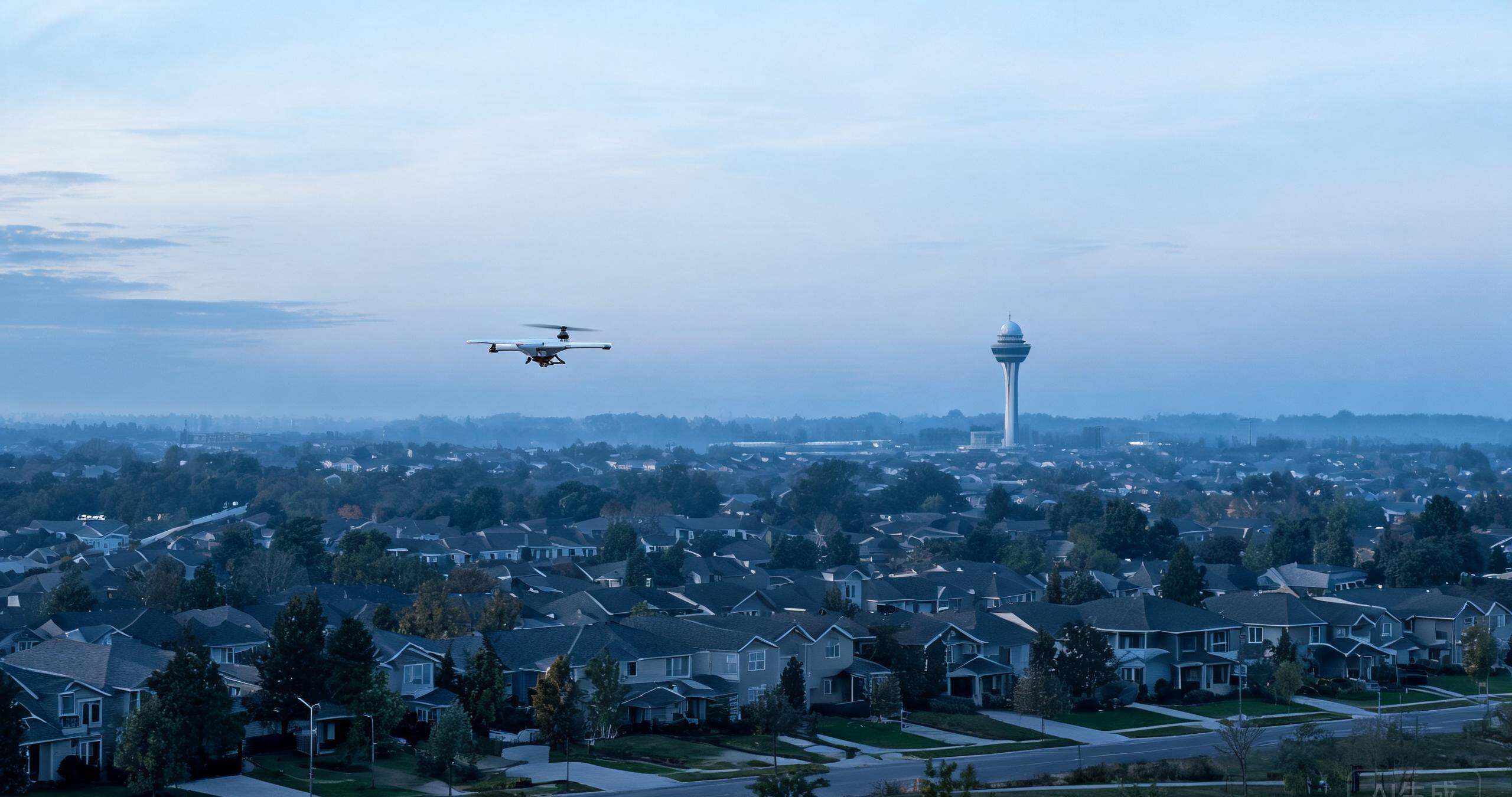
Part 108 Rewrites the Economics of Flying Beyond Visual Line of Sight
The FAA's performance-based BVLOS framework is moving approvals away from one-off waivers and toward aircraft-level standards, changing what delivery, inspection and emergency operators can plan for.

Wildfire Response
Satellites, Camera Networks and Long-Endurance Drones Compress Wildfire Detection to Minutes
A layered detection stack of hilltop cameras, thermal satellites and fixed-wing drones is shrinking the gap between ignition and dispatch, while airspace coordination and false-alarm filtering remain the hard problems.
Counter-UAS
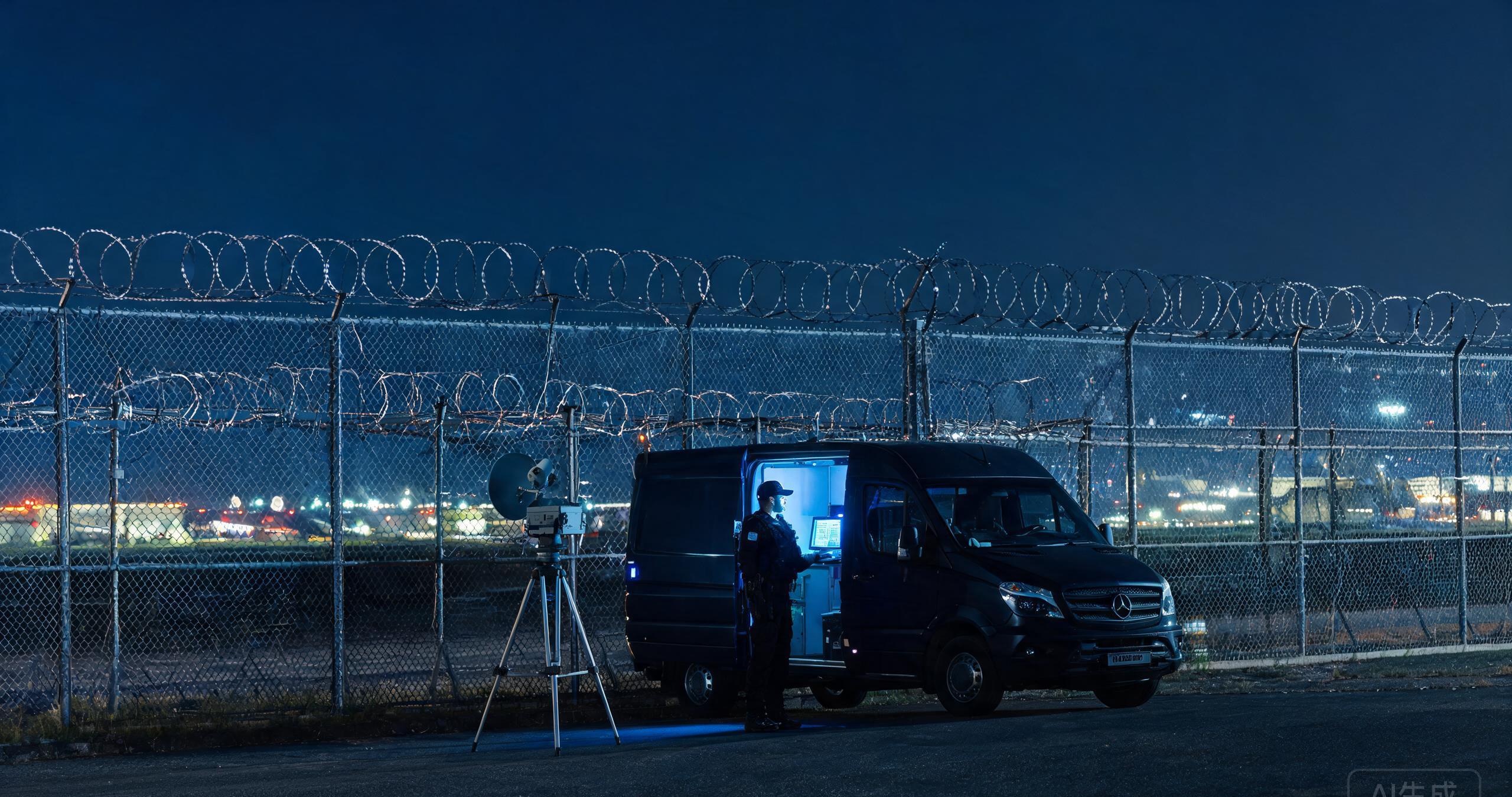
Airport Counter-Drone Programs Move From Jamming to Layered, Evidence-Graded Detection
After years of ad-hoc trials, airports are building permanent detection architectures that fuse radio frequency, radar, acoustic and optical data, while regulators slowly define who may actually take a drone down.